

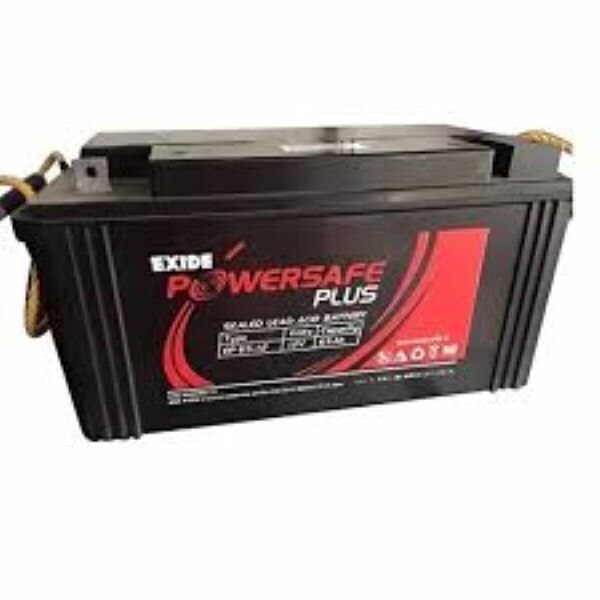
Reliable backup depends on more than choosing a battery with a large ampere-hour number. You will learn how SMF batteries work, calculate a suitable battery bank, distinguish UPS standby duty from household cycling, and check the installation details that protect runtime and battery life.
Key takeaways
- Calculate battery capacity from load, backup time, and inverter efficiency.
- Use UPS batteries for short standby backup, not unsuitable repeated deep cycling.
- Check ventilation, polarity, terminals, charging voltage, and cable size before installation.
- Ask an SMF battery supplier about battery type, warranty, date code, and service support.
What SMF and VRLA Mean During a Mains Failure
An SMF battery is a rechargeable lead-acid battery designed to operate without routine water topping. In backup-power work, SMF Batteries and Sealed Maintenance Free Batteries usually mean VRLA batteries using absorbent glass mat (AGM) or gelled electrolyte, which immobilises the acid inside the case.
“Sealed” does not mean airtight. A VRLA battery has pressure-relief valves that remain closed during normal charging but open if gas pressure rises. Overcharging can release gas, dry the electrolyte and damage the battery, so ventilation, clearance and ignition control still matter.
An automotive maintenance-free battery may use a vented flooded design and is not automatically suitable for a UPS or inverter.
During a mains failure, the system works as a chain:
- The charger keeps the battery fully charged while grid power is available.
- The UPS or inverter detects the outage and draws direct-current power from the battery.
- The battery bank supplies stored energy through its terminals.
- The inverter converts that energy into usable alternating-current power for the connected equipment.
The equipment keeps running until the battery reaches the system’s cutoff voltage or the grid returns. Runtime depends on battery capacity, discharge rate, inverter losses and the connected watt load, not on the words “maintenance-free” alone.
A prompt recharge after discharge also matters; leaving the battery partly discharged promotes sulfation, raising resistance and reducing usable capacity.
How to Match Battery Capacity to Your Actual Load
A 10-watt router running for four hours needs about 40 watt-hours, not simply “one battery.” Estimate runtime with: voltage × ampere-hours × usable fraction × inverter efficiency ÷ load watts. Use the manufacturer’s discharge table for the final choice.
1. Measure the actual load in watts. For computer or UPS equipment, check both watts and VA; a poor power factor increases the required VA rating even when watt demand stays unchanged.
- Wi-Fi router, 10 W for 4 hours: one 12 V 9 Ah battery gives roughly 3.5 to 4 hours.
- Desktop computer, 150 W for 1 hour: two 12 V 18 Ah batteries in series provide about 1 hour, subject to the UPS cutoff and computer startup demand.
- CCTV system, 40 W for 8 hours: four 12 V 18 Ah batteries in a 2S2P arrangement provide roughly 8 hours.
- Emergency light, 5 W for 6 hours: one 12 V 7 Ah battery is close to the requirement.
- Small UPS: use the UPS label first. A 24-volt UPS needs two 12 V batteries in series; paralleling identical strings increases ampere-hours.
3. Match battery duty, terminal type, dimensions and charging settings. SMF Batteries rated for standby UPS service are not automatically suitable for daily inverter cycling.
A 100 Ah rating commonly uses a 20-hour test rate. Higher current reduces usable capacity, so size from the intended discharge rate and cutoff voltage, not the label alone.
Choosing Between UPS Standby and Repeated Household Backup
Choose an SMF battery for occasional UPS backup; choose a cyclic inverter battery for repeated household outages and daily discharge. SMF Batteries used in UPS systems usually remain on float charge, then deliver high current for a short interruption before recharging.
| Duty | SMF battery for UPS standby | Cyclic inverter battery |
|---|---|---|
| Use pattern | Occasional outages, usually short | Frequent or daily discharge and recharge |
| Best match | Router, computer, CCTV or small UPS | Home inverter, solar backup or long evening backup |
| Battery design | Standby-rated AGM or gel VRLA | Deep-cycle design with published cycle-life data |
| Main risk | Repeated deep discharges shorten service life | Higher upfront size or cost for a standby-only load |
A nominal ampere-hour rating does not make the two batteries interchangeable. A standby battery used every day can lose capacity quickly because deep cycling stresses its plates; leaving it partly discharged also promotes sulfation and reduces charge acceptance.
Check the label or datasheet for AGM, gel or flooded construction, intended duty, discharge curves, allowable depth of discharge, cycle-life figures and the manufacturer’s cutoff voltage. Automotive “maintenance-free” batteries are not automatically suitable: many are vented starting batteries built for engine cranking, not sustained inverter discharge.
Keep an SMF battery on its approved float charger for standby use, and recharge it promptly after an outage. If your household routinely runs fans, lights or appliances through several discharge cycles each week, select a cyclic inverter battery instead.
What Maintenance-Free Operation Still Requires
Maintenance-free means you do not add water; it does not mean you can ignore charging. Set the UPS or charger to the manufacturer’s float and boost voltages for that exact AGM or gel model, and never use an automotive charger without confirming compatibility.
Overcharging opens the pressure-relief valve, dries the electrolyte and shortens the life of SMF Batteries.
Temperature compensation is essential. Charging voltage should fall as battery temperature rises and rise as it falls, commonly by about 3–5 mV per cell per °C. Keep the battery near its design reference, often 20 or 25 °C; continuous operation 10 °C above that reference can roughly halve service life.
Check the installation at a fixed interval:
- Keep the enclosure dry, clean and away from direct sun, heaters and hot UPS exhaust.
- Provide the ventilation and clearance specified by the manufacturer, even though VRLA batteries are sealed.
- Keep sparks, flames and smoking away from the battery area; a fault or overcharge can release hydrogen.
- Inspect for swelling, cracks, electrolyte residue, corrosion, loose terminals and damaged cables.
- Record terminal voltage, charger readings and the battery’s manufacturing date; investigate a sudden voltage drop or heat rise.
Do not place a failing battery back into service because it still powers a small load. Replace it when testing shows inadequate capacity, physical damage or repeated overheating, and use the specified battery type rather than mixing old and new units.
Installation Checks and Questions for an SMF Battery Supplier
Before buying, confirm that “SMF” means the right construction for your system. Sealed Maintenance Free Batteries usually use VRLA technology with AGM or gel electrolyte; some automotive maintenance-free batteries are vented flooded lead-acid units and are not suitable substitutes for a UPS bank.
- Ask the SMF Battery Supplier for the construction, nominal voltage, ampere-hour rating, test rate, dimensions, terminal type, intended duty and manufacturing date. “Maintenance-free” does not prove UPS suitability, runtime or cycle life.
- Match the bank to the equipment: verify the UPS or inverter’s DC voltage, charging current, polarity and cable size. Confirm whether batteries connect in series for voltage or parallel for capacity.
- For parallel batteries, use the same model, age, capacity and state of charge. Use equal-length cables and equal conductor resistance; avoid multiple parallel strings unless the manufacturer provides a connection method.
- Obtain the exact float and cyclic charging settings. A 12-volt battery may use about 13.5–13.8 volts on float at 25°C, while cyclic charging may reach 14.4–14.7 volts; use the maker’s figures, with temperature compensation.
- Check installation safety: provide manufacturer-specified clearance and ventilation, protect terminals from accidental short circuits, control ignition sources and install the correct fuse or isolator. VRLA valves can release gas during overcharge.
Exide Power Centre (9348465566,S R Nagar) can help verify matching, terminal layout and charging settings before a bank is commissioned. Keep the invoice, serial numbers, warranty terms and commissioning readings.
Related products
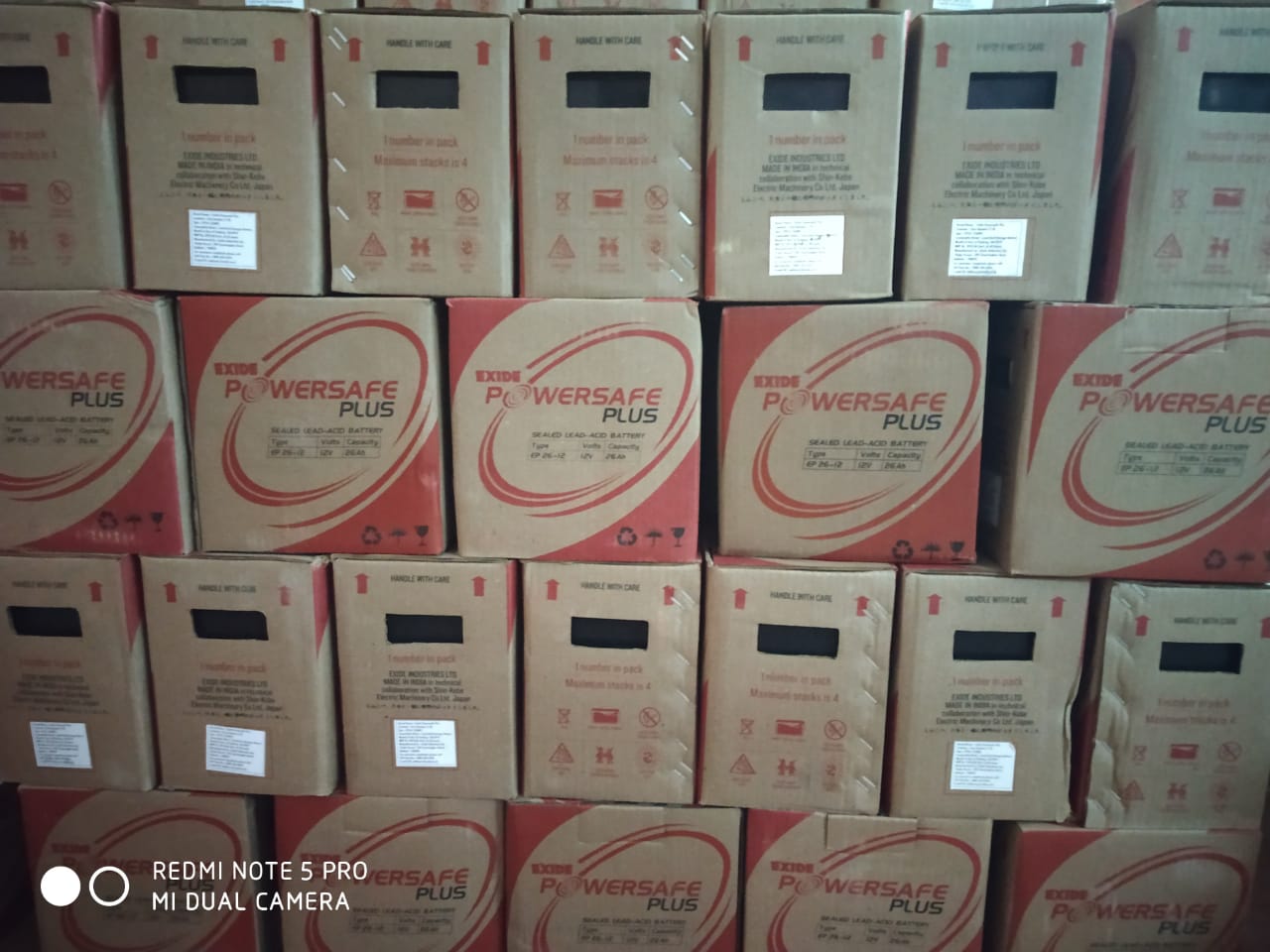 | SMF VRLA Exide Power Safe with 2 Years Warranty Exide Ups Battary for Power back up. This Product can be used for Industries. View product → |
 | Features & Benefits Deep cycle application ,Fast recovery from deep discharge, Extended cycle life ,Fast recharge capability, Excellent charge... View product → |
Frequently asked questions
What do SMF and VRLA mean during a mains failure?
SMF means Sealed Maintenance Free, while VRLA means Valve Regulated Lead Acid. AGM and gel batteries immobilise the electrolyte and use valves to manage internal gas pressure during charging.
How do you match SMF battery capacity to your actual load?
List the equipment wattage, add the loads that run together, multiply by the required backup hours, and allow for inverter losses and battery discharge limits. Choose a battery bank that can deliver this energy without excessive discharge.
Should you choose a UPS standby battery or a household backup battery?
Choose a UPS standby battery for controlled, shorter backup duties such as computers and networking equipment. Choose a battery designed for repeated cycling when your household system runs appliances through frequent or extended outages.
What maintenance does an SMF battery still require?
You do not top up water, but you still need clean terminals, secure connections, suitable charging voltage, adequate ventilation, and periodic checks for swelling, leakage, heat, or reduced backup time.
What should you ask an SMF battery supplier before installation?
Ask for the battery technology, capacity rating, manufacture date or date code, warranty terms, charging requirements, recommended cable size, disposal guidance, and support for installation and testing.
Related product
 | Exide VRLA Tubular Battery / 5 Years Warranty The Legendary Exide Torr Tubular Reliability now comes maintenance free from the state of the art manufacturing line. View product → |


