
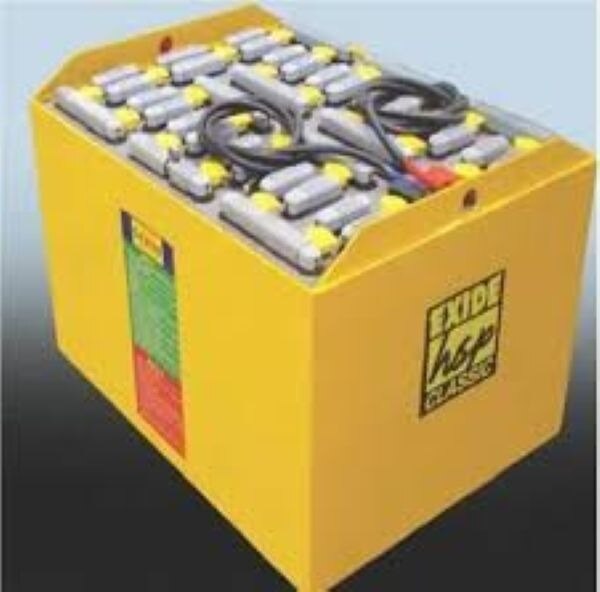
A forklift or electric tow vehicle cannot run continuously from one battery without a plan for discharge, charging, cooling and replacement. By the end, you will be able to map shift demand, select an Industrial Traction Battery, verify its physical and electrical fit, and choose a charging or swapping system that protects uptime.
Key takeaways
- Plan work, charging and cooling as one operating cycle.
- Size the battery from shift loads, not amp-hour capacity alone.
- Check voltage, dimensions, terminals and weight against the equipment data plate.
- Match the charger to battery chemistry and required uptime.
Build continuous operation around energy, charging and battery availability
A vehicle keeps working across repeated shifts through coordinated discharge, planned charging, cooling and battery swapping—not by running one battery indefinitely. The traditional flooded lead-acid pattern is approximately 8 hours of work, 8 hours of recharge and 8 hours of cooling before reuse.
Treat that as a planning model, not a universal timetable: duty cycle, charger output, battery condition and site rules determine the actual schedule.
- One shift: charge the battery during the available off-hours, then retain a reserve for the next charging window.
- Two shifts: use a fully charged spare battery, or schedule charging between shifts if the first battery can safely support the second shift.
- Three shifts: plan multiple batteries, dedicated charging windows and a controlled swap process; otherwise the vehicle will wait for a battery to finish charging or cooling.
A charging room must have enough ready batteries, compatible chargers and safe handling equipment. Shortening the charge or cooling period can send an undercharged or overheated battery into service.
| Battery type | Designed to do | Why it fits or fails |
|---|---|---|
| Traction Batteries | Repeated motive power | Support acceleration, lifting, braking and deep cycling in industrial vehicles |
| Automotive starting battery | One short, high-current burst | Repeated deep discharge quickly damages it and reduces available power |
| UPS or inverter battery | Stationary backup loads | Not designed for vehicle acceleration, hydraulic lifting or braking cycles |
Size the battery for the real duty cycle, not its nominal capacity
Choose an Industrial Traction Battery by calculating the machine’s real duty cycle, not by matching nominal voltage or the largest ampere-hour figure available. Ask the equipment and battery suppliers to model the shift before selecting the battery.
- Record equipment voltage, average and peak motor current, ampere-hour or kilowatt-hour demand per shift, rated discharge time, shift length, allowable depth of discharge and reserve required for the next charging window.
- Measure lift and hydraulic demand, acceleration, route length, gradients, floor condition, payload, attachment loads and traffic delays. Include pauses, because repeated starts and hydraulic work can consume more energy than steady travel.
A nameplate ampere-hour rating does not equal runtime. Lead-acid capacity falls as discharge current rises through the Peukert effect; temperature, battery age, pauses and the permitted end-of-discharge voltage also change usable energy.
| Option | Advantage | Trade-off |
|---|---|---|
| Add capacity | Extends runtime and reserve | Adds weight, cost and charging demand |
| Add a spare battery | Supports swapping and repeated shifts | Requires storage, handling equipment and charging capacity |
| Reduce load | Lowers current and heat | May reduce payload, speed or attachment use |
| Change chemistry | Lithium-ion can support partial charging with an approved BMS | Requires compatible charger, controls and installation |
Use the supplier’s duty-cycle calculation to choose among these options. A battery that fits the voltage but cannot cover the measured load and reserve will stop the machine before the charging window.
Read the data plate and confirm the battery will physically fit
Before ordering, read the data plate on the battery case—usually fixed to its side, end panel or top cover—and compare every figure with the forklift, tow truck or lifting-platform manual.
- Record nominal voltage, ampere-hour capacity, rated discharge time, battery type, length, width, height, weight, terminal arrangement and connector.
- Measure the vehicle tray for length, width and height. Check hold-downs, cable reach, polarity, connector shape and the vehicle’s permitted battery weight.
- Confirm the pack cannot shift during braking or lifting. A correct voltage does not prevent an oversized battery from damaging the tray, exceeding the counterweight design or leaving cables too short.
| Item | Battery data plate or supplied sheet | Machine requirement |
|---|---|---|
| Voltage and capacity | Nominal volts, ampere-hours and rated discharge time | Values specified in the manual for the duty cycle |
| Physical fit | Length, width, height and weight | Tray limits, hold-down positions and permitted battery weight |
| Connection | Terminal layout, polarity and connector | Cable reach, mating connector and vehicle polarity |
| Construction | Battery type and charging instructions | Approved chemistry, charger and ventilation arrangement |
BS and DIN references help identify recognised construction, dimensional and performance conventions. They do not replace the machine maker’s fit, weight, connector or charging requirements. IEC 60254 covers lead-acid traction batteries, while IEC 62485-3 addresses safety in traction battery installations; verify the exact test figures and terminal layout on the supplied data sheet.
Match charging method to chemistry and the required uptime
A reliable shift pattern starts with the charger, not nominal voltage alone. Match charger voltage, output current, connector, polarity and charge profile to the chemistry, battery data plate and equipment manual. A full charge requires the specified recharge time and, for flooded lead-acid Traction Batteries, a cooling period before the next shift.
Unplugging early leaves an undercharged Industrial Traction Battery and reduces the following shift’s runtime.
| Option | Availability approach | Conditions and risks |
|---|---|---|
| Battery swapping | Near-continuous availability | Keep charged spares, compatible connectors, charging space and safe lifting equipment. Check voltage, polarity, state of charge and installation controls before fitting a replacement. |
| Opportunity charging | Short charges during breaks or idle periods | Suits many lithium-ion systems. Flooded lead-acid batteries still need a proper full-charge and maintenance program; repeated partial charging promotes sulfation and electrolyte imbalance. |
Flooded lead-acid charging releases hydrogen and oxygen, especially near completion. Provide ventilation, spark and flame control, acid-resistant protection, safe connection procedures and watering with the specified water; do not add acid routinely. Lithium-ion packs need an approved charger and battery-management system that controls current, cell voltage, temperature, state of charge and alarms.
Isolate a damaged pack or one showing abnormal heat, charger faults or BMS alarms. Exide Power Centre can check the battery, charger and shift plan against the equipment data plate before you purchase a battery alone.
Related product
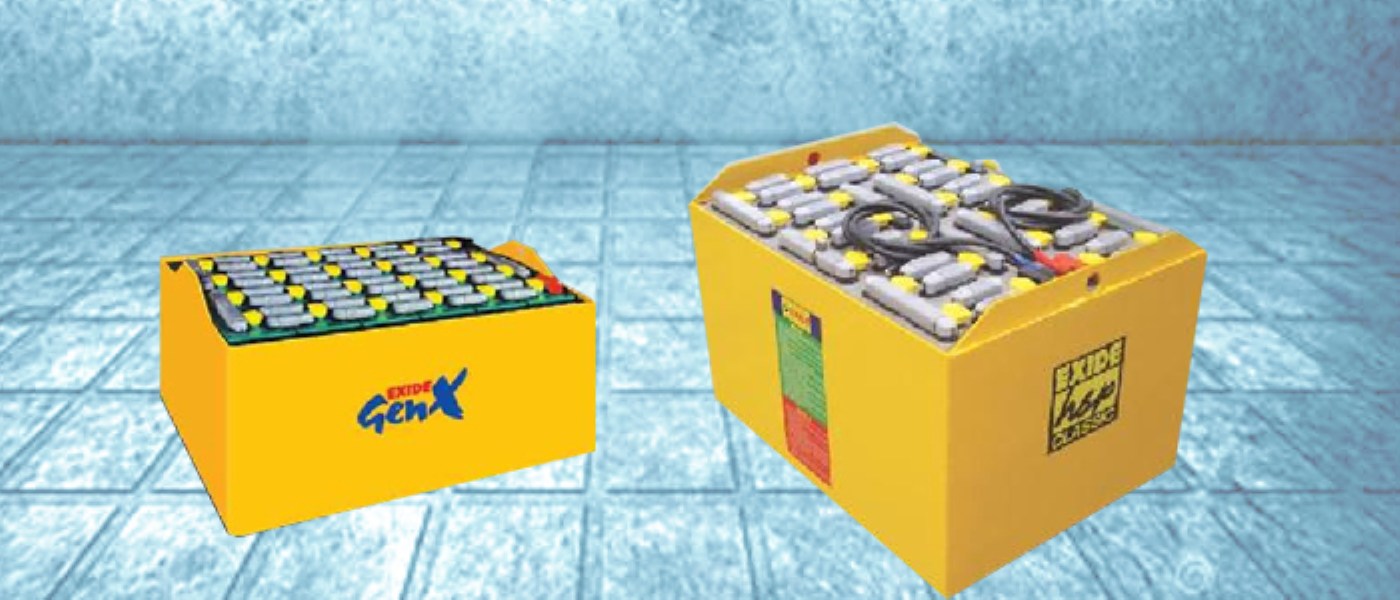 | Exide Traction & Motive Power - 2 Years Warranty Exide traction batteries are used in electrically powered vehicles like forklift, tow truck, power trolley, lifting platforms and other industrial... View product → |
Control heat, dust and handling conditions that reduce available runtime
Hyderabad heat can shorten runtime before a shift ends. High temperatures accelerate electrolyte loss in flooded batteries, raise charging stress, age seals and cables, and can derate lithium-ion electronics when cells or the battery-management system become too hot.
Cold conditions reduce available output and make charging slower, so a battery that works in a warm warehouse may deliver less energy in a cold environment.
Keep charging areas ventilated, especially for flooded systems that release hydrogen and oxygen. Control dust and water around terminals, connectors, chargers and cooling paths; dust causes tracking and poor contacts, while water promotes corrosion. Vibration, uneven floors and impacts can crack casings, loosen connections or damage internal cells.
1. Inspect flooded batteries for electrolyte level, corrosion, casing damage and cable condition. Use the specified water for topping up; do not add acid as routine maintenance. Isolate a lithium-ion pack after impact, abnormal temperature, charger fault or battery-management alarm, and arrange qualified inspection.
2. Treat hydraulic pumps, lights, fans and attachments as runtime loads. Heavy accessory use can consume reserve energy faster than travel alone.
3. Record state of charge, charge completion, swap history, alarm codes, watering and unusual heat. Trends expose declining capacity before a vehicle stops mid-shift.
For flooded systems, use full charging and scheduled maintenance. Use approved opportunity charging only when the chemistry and BMS permit it; repeated partial charging without a full-charge program damages flooded batteries. If downtime costs production, document a reserve or spare-battery plan.
Frequently asked questions
How do traction batteries support continuous industrial operation?
They support repeated shifts through planned discharge, charging, cooling and battery swapping rather than running one battery indefinitely.
How should you size an industrial traction battery?
Use the equipment’s real duty cycle, including operating hours, load, travel, lifting and pauses, instead of relying only on nominal amp-hour capacity.
What should you check before buying an electric traction battery?
Read the equipment data plate and confirm voltage, capacity, dimensions, terminal layout, connector type and battery weight.
How do you choose a charger for a traction battery?
Match the charger to the battery chemistry, voltage, capacity and charging profile, then check whether its charging time supports the required uptime.
What conditions reduce traction battery runtime?
Heat, dust, poor ventilation, incorrect handling and unsuitable charging conditions reduce available runtime and can accelerate battery wear.