
Choose a battery from the energy your critical loads consume, the hours or days of backup you need, and the capacity you can safely use—not from the nameplate alone. By the end, you will be able to calculate storage, compare battery ratings and chemistries, check inverter compatibility, and assess lifetime value before selecting a system.
Key takeaways
- Size storage from outage energy deficits, losses and usable depth of discharge.
- Convert ampere-hours to kilowatt-hours before comparing Solar Batteries.
- Match battery voltage, bank capacity and charge limits to the inverter.
- Compare warranty terms, installation conditions and lifetime cost—not just purchase price.
How do you calculate the battery capacity your solar system needs?
Calculate the required nominal storage from the energy deficit during the outage: critical-load energy minus dependable solar contribution, adjusted for conversion losses and the battery’s usable discharge range. Solar Batteries with the same nameplate kWh can therefore provide different energy to your loads.
- Add only the critical loads, such as lights, refrigerator, router and medical equipment. Exclude electric heating, pumps or other loads the backup inverter cannot support.
- Multiply their estimated daily consumption in kWh by the required backup duration in days.
- Subtract conservative solar energy available during that period. Use cloudy-season production, daytime household consumption and charging limits, not the array’s peak rating.
- Divide the remaining energy by complete-system efficiency and allowable depth of discharge.
Use this calculation: required battery nameplate kWh = [(critical-load kWh × backup days) − dependable solar kWh] ÷ (system efficiency × allowable depth of discharge). Include inverter, battery, standby and conversion losses in system efficiency.
Treat cloudy-day reserve as extra autonomy days or as a minimum state-of-charge reserve; do not count that reserved energy as available output.
Ampere-hours require another conversion: Ah × nominal voltage ÷ 1,000 = nominal kWh. A 150Ah, 12V battery equals 1.8 nominal kWh, not 1.8 usable kWh. Apply the manufacturer’s maximum depth-of-discharge limit, then confirm the solar array can recharge the energy deficit before the next outage.
How should you compare ampere-hours, kilowatt-hours and C10 ratings?
A 150Ah battery does not provide 150Ah at every load. Ampere-hours measure charge at a specified test rate, while kilowatt-hours estimate energy: Ah × nominal voltage ÷ 1,000. A 12V, 150Ah battery therefore has 1.8kWh of nominal energy before depth-of-discharge limits, inverter losses and reserve charge reduce what your Solar Power Storage Battery can deliver.
| Rating | What it means | What to check in use |
|---|---|---|
| Ampere-hours (Ah) | Charge delivered at a stated test rate | Voltage, discharge rate and usable depth of discharge |
| Kilowatt-hours (kWh) | Nominal energy calculated from Ah and voltage | Usable kWh after battery and inverter limits |
| C10 | Capacity measured over a 10-hour discharge | The manufacturer’s tested current and rate-corrected capacity |
| C20 | Capacity measured over a 20-hour discharge | A slower test that can show a higher Ah figure |
For a 150Ah C10 lead-acid battery, C10 represents about 15A for 10 hours. Drawing 30A does not guarantee five hours, because Peukert’s law reduces available capacity as discharge current rises. A 150Ah C20 battery was tested at about 7.5A, so compare the test rate before treating two 150Ah labels as equivalent.
Ask for the manufacturer’s capacity at your actual discharge current, not only the headline Ah figure. Also verify continuous and surge-kilowatt ratings; adequate kWh will not prevent an inverter trip if a pump, refrigerator or motor needs more starting power.
How do you build a battery bank and match it to the inverter and charger?
Choose the battery bank’s nominal voltage to match the inverter’s battery input: 12V, 24V or 48V. With 12V batteries, connect units in series to raise voltage; connect identical series strings in parallel to increase ampere-hours and discharge power.
| System voltage | 12V batteries in series | Result |
|---|---|---|
| 12V | 1 | 12V bank |
| 24V | 2 | 24V bank |
| 48V | 4 | 48V bank |
For example, four 12V 150Ah batteries in series create one 48V, 150Ah string, not 600Ah. A second identical string in parallel creates 48V and 300Ah. Use batteries with the same model, chemistry, capacity, age and state of charge; mismatched units share current unevenly and fail early.
Confirm these points before connecting the bank:
- The inverter accepts the bank’s nominal voltage and its full operating-voltage range, including low-voltage shutdown and high-voltage cut-off.
- The battery’s continuous and surge discharge current exceed the inverter’s demand, including motor-starting loads.
- The charger and solar charge controller use the battery manufacturer’s charge voltage, maximum charge current and chemistry-specific profile.
- The inverter, charger and battery-management system support the same communication protocol, such as CAN or RS485, with compatible pin assignments and firmware.
- The battery’s charge and discharge temperature limits fit the installation location. Lithium batteries need charging protection below 0°C when the manufacturer requires it.
Also compare usable kilowatt-hours, not nameplate capacity alone, after depth-of-discharge limits, inverter losses and reserve charge.
Which battery chemistry and installation conditions fit your use?
Choose flooded tubular for a ventilated, accessible site and frequent deep cycling; choose lithium iron phosphate (LFP) when space, weight, fast charging and high usable capacity matter more than purchase price.
| Chemistry | Choose it when | Usable capacity, life and cost | Installation conditions |
|---|---|---|---|
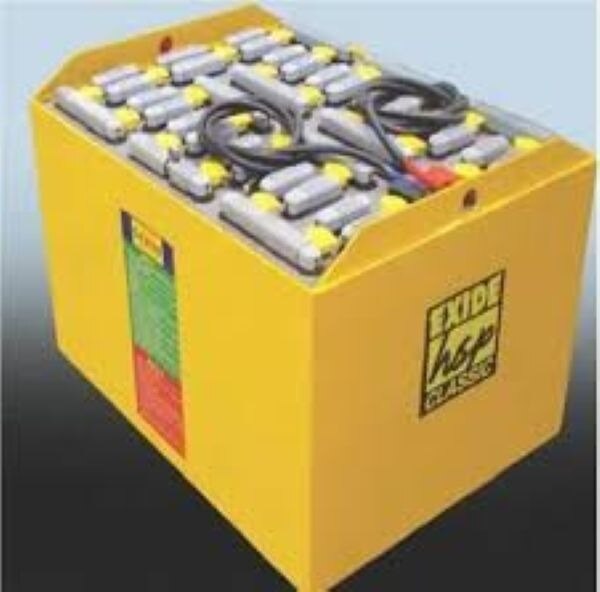
| Flooded tubular | You need economical daily backup and can maintain it | Moderate usable discharge, good cycle life; low upfront cost, but water and replacement costs add up | Heavy; requires upright mounting, ventilation, hydrogen management and access for electrolyte checks |
| Flat-plate lead-acid | Budget is the main constraint and cycling is occasional | Lower upfront cost, but lower cycle life and usable capacity than tubular batteries | Heavy; requires ventilation, correct charging and maintenance access |
| AGM | You want sealed construction with no routine water top-up | Better usable discharge and faster charging than many flooded batteries; medium-to-high cost | Heavy but spill-resistant; provide ventilation, temperature control and approved charging |
| Gel | You need sealed deep-cycle storage and gentle, controlled charging | Good cycle life at shallow-to-moderate discharge; charging is slower and overcharging damages it | Ventilated installation remains necessary; keep within the manufacturer’s charging-temperature range |
| LFP | You cycle daily, need maximum usable energy or have limited floor space | High usable capacity, long cycle life, fast charging and low maintenance; highest upfront cost | Light; requires a BMS, compatible inverter, monitoring and protection against charging below the specified minimum temperature |
Compare delivered energy over the service life, not nominal kilowatt-hours alone. Include round-trip losses, permitted depth of discharge, cycle frequency, replacement interval, installation hardware and maintenance. For every option, check the rated charging and operating temperature range; heat shortens life, while cold reduces available power.
How do you judge a supplier, warranty and lifetime cost before buying?
A low purchase price proves little if the warranty excludes deep cycling, installation labour or transport. Ask the Solar Battery Supplier for the written warranty, not a brochure summary, and check its start date, coverage period, maximum depth of discharge, cycle or throughput limit, replacement-versus-repair promise, and exclusions for temperature, poor ventilation and unauthorised settings.
Check the system, not just the battery label:
| Check | Strong evidence | Warning sign |
|---|---|---|
| Warranty | Rated cycles, usable capacity threshold, replacement process and labour terms | “Up to” life with no cycle or capacity conditions |
| Safety | Model-specific BIS or IEC test documentation; UN 38.3 for lithium transport | Generic chemistry certificate unrelated to the model |
| BMS support | Named inverter pairing, communication protocol, firmware requirement and fault shutdown behaviour | “Compatible” without a tested combination |
| Service | Installation scope, response time, spare-parts route and monitoring support in writing | Warranty depends on an unnamed third party |
For lithium systems, confirm that the BMS monitors cell voltage and temperature, balances cells, limits charge and discharge, and records faults. Also verify continuous and surge power: sufficient kWh will not prevent a trip if a pump or refrigerator exceeds the battery’s discharge rating.
Compare lifetime cost as price divided by delivered energy: usable kWh × round-trip efficiency × expected cycles, then add installation, monitoring, maintenance and replacement costs. At Exide Power Centre (9348465566, S R Nagar), request this calculation alongside the proposed warranty and inverter pairing rather than comparing nominal kWh alone.
Related product
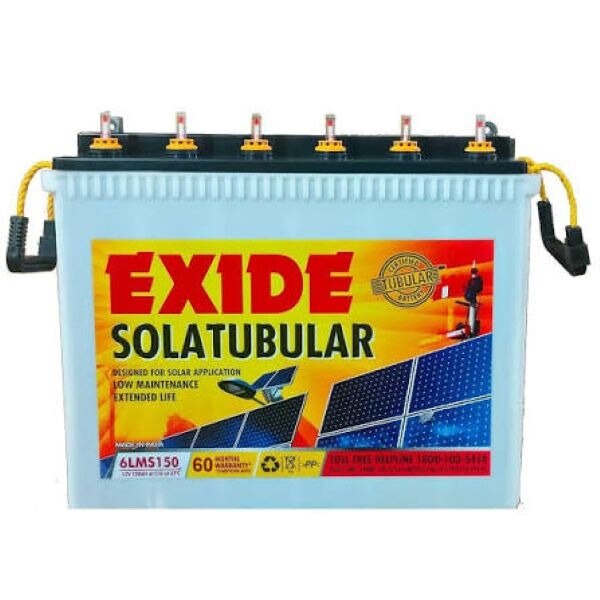
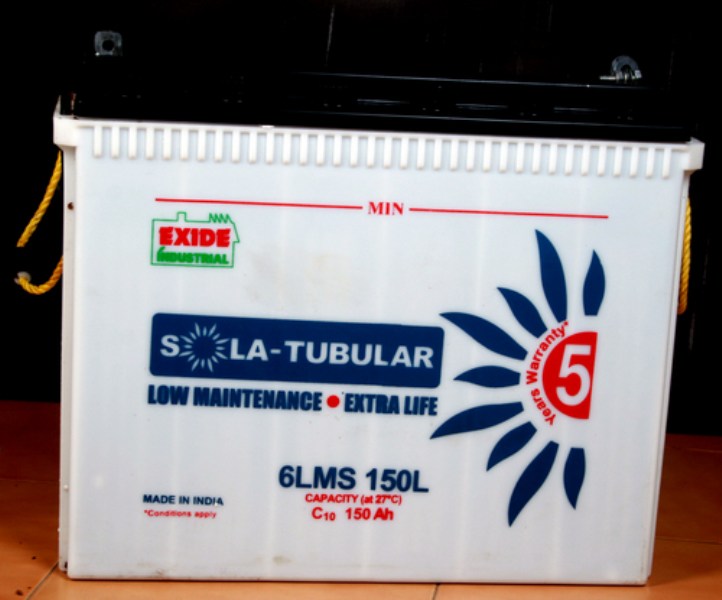 | Exide Solar Tubular Battery - 5 Years Warranty These Batteries are specially designed for Solar Photovoltaic application. View product → |
Frequently asked questions
How do you calculate the battery capacity your solar system needs?
Subtract dependable solar contribution from critical-load energy during the outage, then adjust for conversion losses and usable depth of discharge.
How should you compare ampere-hours, kilowatt-hours and C10 ratings?
Use kilowatt-hours to compare stored energy, ampere-hours with voltage to calculate energy, and the C10 rating to understand the stated discharge test rate.
How do you build a battery bank and match it to the inverter and charger?
Match the bank’s voltage to the inverter, size its ampere-hour capacity for the required runtime, and keep charging voltage and current within battery limits.
Which battery chemistry and installation conditions fit your use?
Choose chemistry based on cycling frequency, available space, ventilation, temperature, maintenance and upfront budget; follow the manufacturer’s installation clearances.
How do you judge a supplier, warranty and lifetime cost before buying?
Check warranty duration, cycle or throughput limits, replacement terms, service support, installation quality and cost per usable kilowatt-hour over the expected life.